

Decluttering Your Home Room by Room
The quickest way to make housework feel lighter is to have less to clean around. Clutter is where dust settles, where kitchen grease clings and where a five-minute wipe-down turns into a twenty-minute shuffle. Working room by room, with a simple keep, donate or recycle decision for every item, is the most sustainable way to tackle it — good for your time, and good for the planet, because reusing and recycling what you already own beats sending it to landfill.
Why a Room-by-Room Approach Works
Emptying the whole house at once is how most decluttering attempts collapse. One room gives you a visible result in an afternoon and a natural stopping point. Set yourself up with three containers — keep, donate, recycle — plus one small bin bag for genuine rubbish, a marker pen and a timer. Work in twenty to thirty minute bursts, and never carry an undecided item into another room; that is simply moving clutter, not clearing it.
Anything you truly cannot decide on goes into a labelled maybe box with today's date on it. Store it out of the way, and if you have not opened it in three months, it leaves the house unopened. Before you donate anything, check it is clean and working, because charity shops cannot sell broken goods. Worn-out clothing, bedding and towels go to a textile bank; old electricals, batteries, paint and out-of-date medicines need your local household waste recycling centre or a pharmacy counter, not the wheelie bin.
Bathrooms and Utility Spaces
These are the quickest wins in the house, so start here for momentum. Empty the cupboard under the sink and gather every half-used bottle, sample sachet and out-of-date toiletry. Decant what you are keeping into a couple of refillable bottles, and take the rest to be recycled where your council accepts them. Medicines go back to a pharmacy for safe disposal.
- Keep two sets of towels and two flannels per person; rotate them so nothing sits unused at the back of the airing cupboard.
- Consolidate cleaning products down to a refillable all-purpose spray, white vinegar, bicarbonate of soda and a few microfibre cloths. They clean almost everything and come in far less packaging than a cupboard full of specialist bottles.
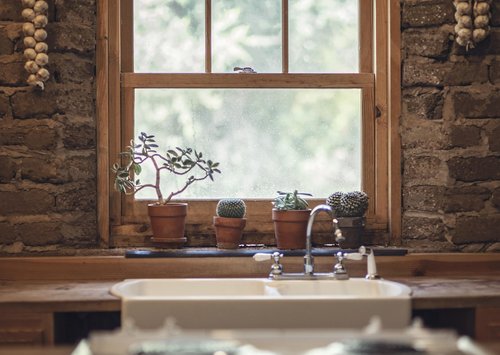
- Clear the shower ledge and windowsill completely. A single clear surface takes seconds to wipe, and limescale never gets the chance to build up behind a row of bottles.
- Swap disposable wipes and cotton pads for washable cloths and reusable rounds, kept in a small jar by the sink.
Bedrooms and Wardrobes
Turn every hanger in your wardrobe the wrong way round. As you wear something and put it back, turn the hanger the right way. After a full season, anything still facing backwards has not been worn — that is your donate pile, with no guilt involved. Set aside a small repair pile for missing buttons and dropped hems, and deal with it in one fifteen-minute mending session rather than leaving it indefinitely.
- Fold and stack jumpers and jeans so you can see everything at a glance; drawer dividers made from old shoe boxes work perfectly.
- Keep one labelled archive box per person for genuine keepsakes, and be strict about the lid closing.
- Round up stray cables and duplicate chargers. Test them, label the ones that work, and recycle the rest at an electricals point.
- Clear under the bed so you can vacuum underneath it properly — dust and dust mites collect fast in a blocked space.
The Kitchen
This is the room where clutter gathers fastest, and where it costs you the most time. Clear one cupboard at a time rather than all of them. Duplicates, cracked lids, mismatched containers, single-use gadgets and chipped mugs can all go — good crockery, pans and working small appliances are welcomed by charity shops and community groups.
Date-check your spices, dried goods and tins, and create a use-it-up shelf at eye level so nothing quietly expires. Decant what you keep into glass jars: you can see what you have, you buy less, and you stop paying for plastic packaging. Give the fridge an "eat me first" box and wipe the shelves as you go, so a full defrost is never needed.
The real dividend is the worktop. Once it is genuinely clear, the after-dinner wipe takes about thirty seconds, and there is nowhere for grease to hide. A little washing-up liquid, warm water and a microfibre cloth will do the whole job.
Living Areas, Hallways and Paperwork
Hallways are where clutter takes root, so give it a home: one hook per person, one basket for bags, one tray for keys and post. Allow one pair of shoes per person by the door and take the rest upstairs. In the living room, keep only the ornaments and books you actually love on display — fewer objects means dusting takes two minutes instead of twenty.
Paper is usually the biggest category in the house. Sort everything into action, keep and recycle, then deal with the action pile the same week. Scan anything you need long term and keep tax and employment records for up to six years; recycle the rest. Cancel subscriptions you have stopped using, and unsubscribe from mailing lists — less digital clutter also means less energy used and a longer life for your devices.
Keeping It Clear Afterwards
Clutter creeps back through small decisions, so build in a few simple habits. Adopt one in, one out: a new pair of shoes means an old pair leaves. Run a ten-minute reset each evening, returning stray items to their rooms, and give one drawer or shelf a monthly sort. Twice a year, do a seasonal pass through each room, which is also the ideal moment to wash cushion covers, vacuum under furniture and check for anything that needs repairing rather than replacing.
With clearer surfaces, a refillable cleaning kit and a short routine, cleaning stops being a chore you dread and becomes something you can finish in half the time — with far less waste along the way.
tag: Home Organisation

Sophie Bennett Author
Maximise narrow utility spaces with wall hooks, slim shelving, and labelled baskets that hold detergents, brushes, and drying essentials neatly.
YOU MAY ALSO LIKE
Smart Storage Ideas for Small Utility Rooms
Aug 23
10Use cool water, a gentle detergent, and flat drying to protect wool fibres, keeping your favourite jumpers soft and correctly shaped.
read more
Washing Wool Jumpers Without Shrinking Them
Aug 19
10Treat grease marks promptly with washing-up liquid and a warm soak, then launder as normal to restore shirts, trousers, and overalls.
read moreCleaning Tips
-

ERRIC CATONA
Improve airflow with a dehumidifier or open window, and space garments apart so indoor drying does not lead to condensation or musty smells.
May 19, 2016 at 5.12 pm
Reply
ERRIC CATONA
Empty shelves, wipe surfaces with a food-safe cleaner, and check seals and vents to keep appliances hygienic and running efficiently.
May 19, 2016 at 5.12 pm
Reply -
ERRIC CATONA
Use lemon, salt, and white vinegar to clean wooden boards, then oil them regularly to prevent cracking and bacterial growth.
May 19, 2016 at 5.12 pm
Reply
Eco Living
Your email address will not be published.